


A patio that drains well is built long before the first paver is set
In Castle Rock and across the Front Range, spring projects move fast—until a patio settles, puddles, or turns icy because water had nowhere to go. Permeable hardscapes are designed to manage water through the surface and into a stone “reservoir” below, helping reduce runoff and improve drainage performance when installed correctly. The key phrase is installed correctly: permeable systems are less forgiving of shortcuts under the surface than traditional patios.
Below is a practical, contractor-level breakdown of how permeable hardscape installation works in Colorado, what to compare against traditional systems, and what to verify before your project starts—so the finished patio performs as well as it looks.
Permeable vs. traditional hardscape: the real difference is the base
| Feature | Traditional paver patio (typical) | Permeable paver system (PICP) |
|---|---|---|
| How water is handled | Sheds water across the surface to an edge, drain, or yard | Moves water through joints into an open-graded stone reservoir below |
| Base material | Dense-graded aggregate (packs tight) | Open-graded aggregate (high void space for storage and flow) |
| Bedding layer | Concrete sand is common | Washed, angular small stone (not sand) |
| Main failure mode | Poor slope / runoff traps water | Sediment contamination clogs the system; poor layer execution causes settlement |
| Maintenance focus | Re-sand joints; fix drainage at edges | Keep joints open and clean (periodic sweeping/vacuuming as needed) |
Permeable interlocking concrete pavement (often called PICP) is widely recognized as a stormwater best management practice because it can reduce runoff by infiltrating and storing water in the stone base before releasing it into soil or a drain system. That performance depends on correct stone selection, clean construction practices, and thoughtful drainage design. (Not all sites are good candidates, especially where soils won’t infiltrate or where groundwater conditions require special design.)
What’s beneath the pavers: the layers that control settlement and drainage
A permeable patio isn’t “pavers on gravel.” It’s a layered assembly designed for structure and water movement. Industry guidance for PICP commonly uses open-graded aggregates such as ASTM No. 57 for the base and ASTM No. 8/89/9 for bedding and joint stone, with larger open-graded stone (like ASTM No. 2/3/4) sometimes used as a deeper subbase reservoir when needed. Proper placement and compaction in lifts is critical.
For Colorado freeze-thaw conditions, drainage and base integrity matter because trapped water can contribute to heaving and joint problems. Permeable systems can perform well in cold climates when designed and maintained properly—especially when the project includes the right edge restraints, stable grading, and a plan for where excess water goes during heavy events or snowmelt.
Permeable hardscape in Castle Rock: when it’s a great fit (and when it needs extra design)
Permeable hardscape shines when you want a patio or walkway that helps manage roof and yard runoff without constantly fighting puddles at the edges. They’re also helpful when you’re trying to reduce how much water reaches the street during storms.
That said, Castle Rock-area properties can vary a lot—expansive clays, tight soils, and steep grades are common. A professional approach usually starts with confirming:
When infiltration into native soil isn’t appropriate, a permeable system can still work as a detention and controlled-release assembly (via underdrains), depending on design goals and site constraints.
Step-by-step: what “done right” looks like for permeable pavers
1) Confirm the drainage plan before excavation
Ask where water will go during a 15–30 minute cloudburst and during a warm-day snowmelt followed by a hard freeze. A good plan includes an overflow route and protects structures and neighboring lots.
2) Excavate to the correct depth (for structure and storage)
Depth isn’t just about supporting pavers—it’s about creating enough open-graded reservoir volume below. The “right” section depends on use (walkway vs. patio vs. driveway), soil conditions, and whether an underdrain is needed.
3) Protect the subgrade and keep fines out
One of the biggest quality separators is jobsite discipline: keeping muddy traffic off the open-graded base, staging materials properly, and preventing soil from sloughing into the excavation. Some specifications call for protective coverings and a sacrificial stone layer during construction to reduce contamination risk.
4) Place open-graded base stone in controlled lifts and compact correctly
Permeable base stone (commonly ASTM No. 57) is typically placed and compacted in a predictable lift thickness (often around 4 inches per lift, depending on design). It should be compacted enough for stability without crushing the gradation or contaminating it with fines.
5) Screed the bedding layer with the correct material (not sand)
Permeable systems usually use small, washed, angular stone for bedding and joint fill—not sand—so water can move vertically. This is one of the most common “looks fine on day one” mistakes that causes long-term drainage issues.
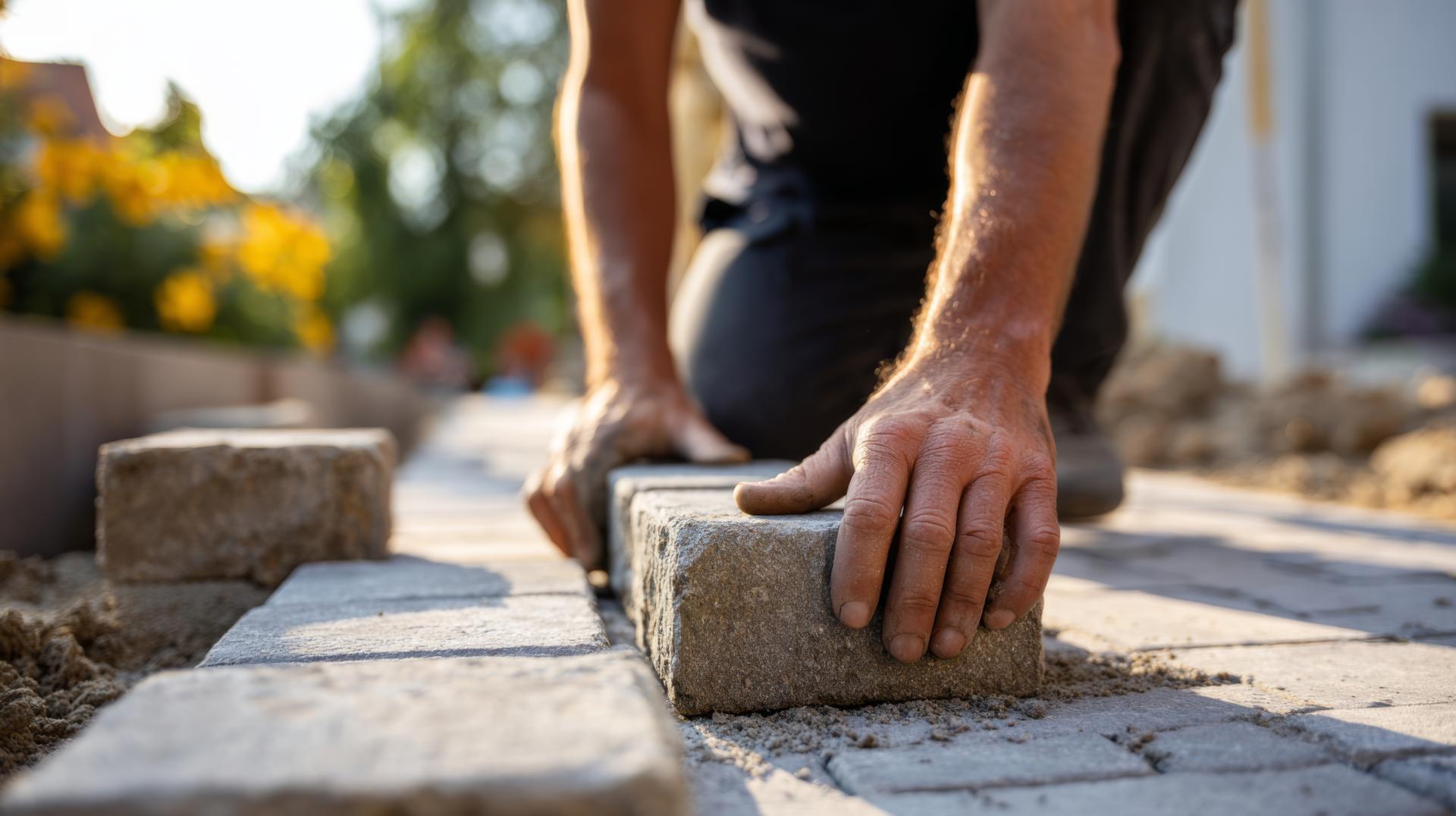
6) Install pavers, edges, and joint stone with performance in mind
Edge restraints matter more than most homeowners realize: they lock the system in place. Joint stone selection is also specific—commonly ASTM No. 8/89/9 for PICP joints—so the surface stays permeable and stable.
7) Plan maintenance up front (it’s simple, but it’s real)
Permeable pavers aren’t “no maintenance,” but they’re not high maintenance either. The main job is keeping joints from filling with sediment over time. If your lot has lots of windblown dust or you’re near construction, periodic sweeping or vacuuming helps preserve infiltration.
Did you know? Quick permeable pavement facts
Local angle: Castle Rock drainage, grades, and spring scheduling
Spring in Castle Rock often means quick swings between snow, melt, and rain. That’s when weak drainage plans show up: water finds low spots, runs toward foundations, or refreezes at the bottom of steps. A permeable patio can help, but it still needs:
If you’re building in phases, it’s often smart to install the “water logic” first—drainage routes, edge conditions, and base section—so later landscape renovation doesn’t undermine a high-performance hardscape.