

Protect your slope before small washouts become expensive repairs

If you live on a slope in Castle Rock, Colorado, the shoulder seasons can be the toughest on your yard. As snow melts and spring precipitation ramps up, water moves downhill fast—picking up soil, undercutting beds, and stressing fences, patios, and foundations. The good news: most hillside failures follow predictable patterns, and the right combination of retaining wall support, drainage management, and erosion control can stabilize the grade and keep your landscape looking sharp for years.

At Rocky Mountain Precision Services, we build stabilization plans around how Castle Rock properties actually behave—variable soils, freeze/thaw cycles, and runoff paths that don’t always match what you see during a dry week.

Why Castle Rock slopes fail: water velocity + soil movement

Most hillside issues come down to two forces working together:

1) Runoff that’s moving too fast
When water can’t soak in quickly, it flows across the surface. That sheet flow turns into rills (tiny channels), then gullies, then full washouts. Douglas County describes stormwater as rain or snowmelt that doesn’t infiltrate and instead runs across land into inlets/ditches/ponds and local waterways. 
2) Expansive (swelling) clay behavior
Much of Colorado has soils with shrink/swell potential. When moisture changes, clay-rich soils can expand and contract, which can crack surfaces, shift hardscape, and worsen drainage paths that feed erosion. Colorado state resources note that expansive soils can increase in volume significantly when wet and that a large portion of Colorado soils have high shrink/swell potential. 
Stabilization works best when you treat the slope like a system: control where water goes, reduce its speed, and reinforce the soil so it stays put.

The 3-part approach that actually stabilizes hillsides

Part A: Drainage first (because walls fail when water has nowhere to go)
A retaining wall is not a dam. If water builds up behind a wall, pressure increases and failure risk rises. Practical drainage improvements often include:

Surface grading: shaping the slope so water moves to safe collection points instead of carving channels through mulch and topsoil.
Subsurface drainage: gravel backfill + perforated drain pipe (typical behind retaining walls) to relieve water pressure.
Downspout control: extending and directing roof runoff so it doesn’t discharge onto a vulnerable slope face.
Energy dissipation: rock splash pads or similar features at discharge points to prevent a “hose effect.”

If you’re in unincorporated Douglas County and planning significant grading/drainage work, it’s also smart to understand local drainage/erosion criteria and permitting expectations; Douglas County maintains Grading, Drainage and Erosion Control (GESC/DESC) guidance and a permitting process for applicable projects. 

Part B: Structural stabilization (retaining walls + terracing)
When a slope is too steep—or when you need flat, usable space—retaining walls and terracing can be the most reliable option. The right wall depends on height, access, soil conditions, and what you want the yard to look like.

Option Best for Pros Watch-outs
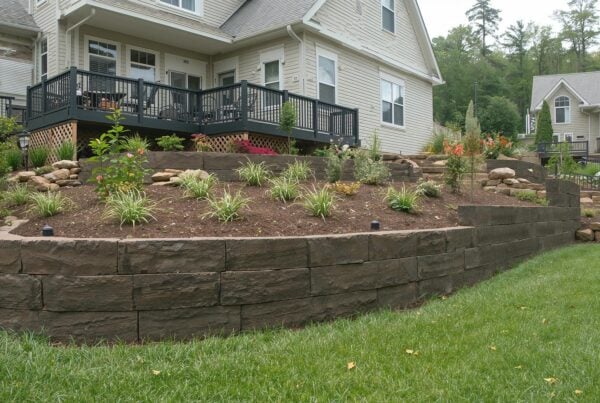
Segmental block wall (modular retaining wall blocks) Terracing, moderate height walls, clean finished look Durable, attractive, flexible curves, can integrate steps/landings Needs proper base, compaction, drainage, and sometimes reinforcement
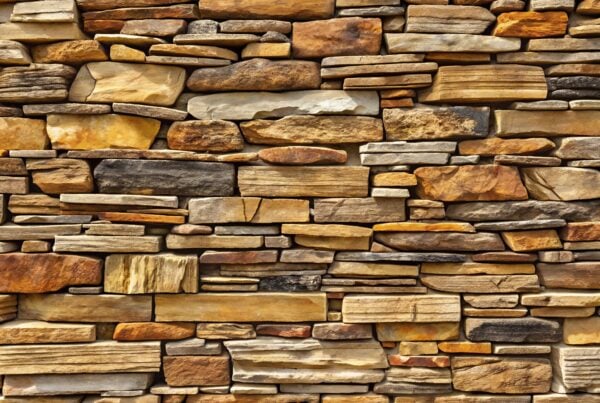
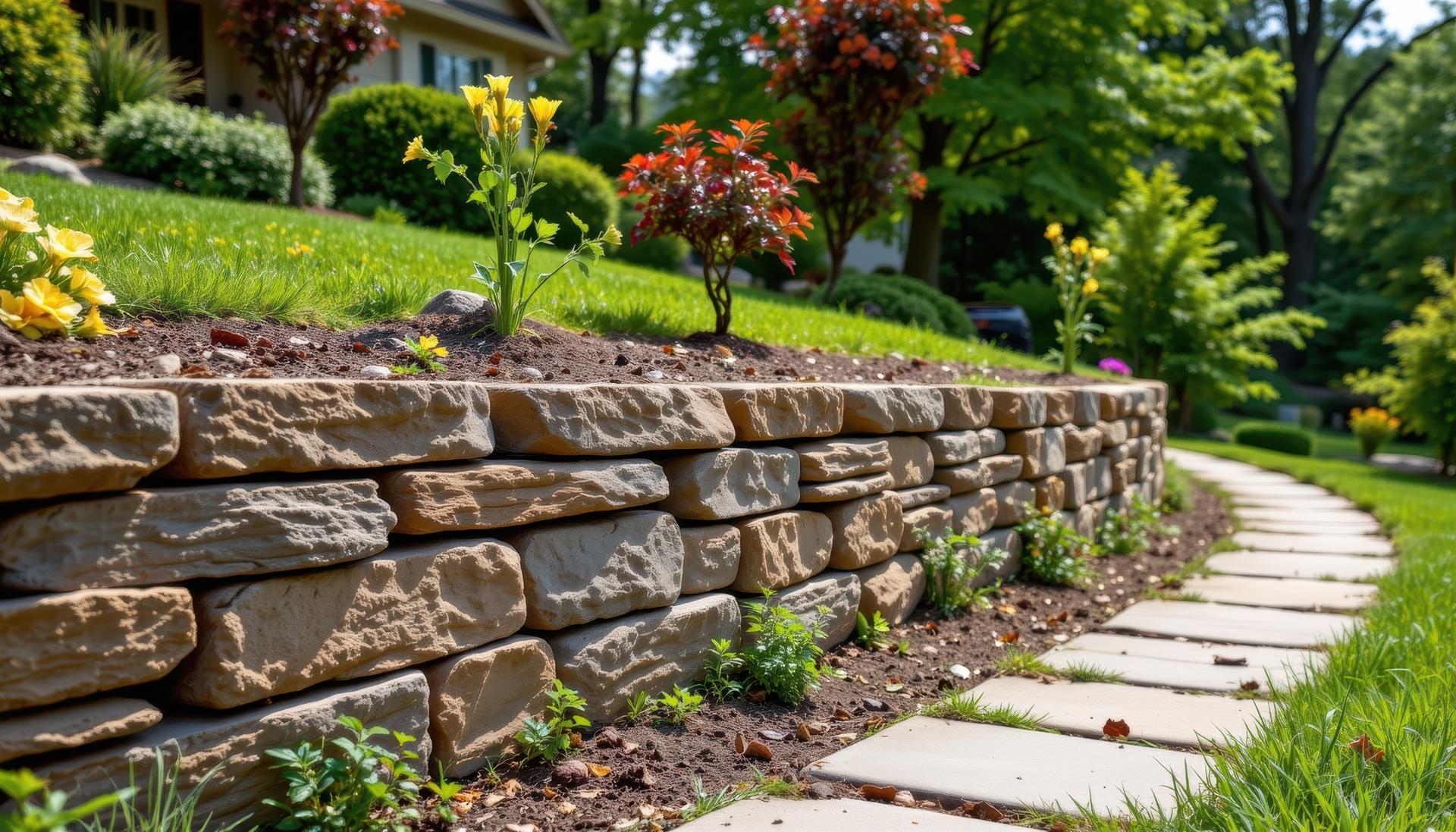
Natural stone wall High-end aesthetics, landscape integration Timeless look, strong when built correctly Higher labor/material cost; craftsmanship matters
Concrete wall (poured or formed) Tight spaces, certain engineered needs Very strong, customizable finish options Drainage/weep design is critical; more disruptive install
Tiered terraces (multiple shorter walls + planting beds) Steeper yards needing usability and erosion resistance Breaks runoff speed, adds planting zones, looks intentional Requires good layout and consistent drainage between tiers
A helpful planning principle for sloped properties is to work with natural landforms and drainage patterns to reduce disturbance and avoid overbuilding tall walls—Douglas County’s rural living guidance highlights stepping elevations on sloping sites to avoid high retaining walls and extensive cut/fill. 
Part C: Erosion control (keep soil in place while plants establish)
Even with great drainage, bare soil on a slope is vulnerable. Erosion control focuses on protection during wet periods and establishment of long-term vegetation.

Erosion control blankets / mats: hold topsoil and seed on steeper areas and swales.
Mulch + tackifier: reduces splash erosion and slows surface flow.
Rock armor (riprap) in concentrated flow zones: protects channels where water must move.
Wattles, check structures, and sediment controls: slow water and trap sediment during active work; check dams are designed to let water pass through while slowing velocity and dissipating energy. 

Quick “Did you know?” facts for Castle Rock homeowners

Expansive soils aren’t rare in Colorado. State resources note that about half of Colorado’s soil has high or very high shrink/swell potential, which can affect hardscape and drainage behavior. 
Erosion is often a “routing” problem. If you can redirect runoff into stable conveyance (rather than letting it roam), you often prevent repeat washouts.
Most wall issues start behind the wall. Pressure from trapped water is one of the biggest avoidable risks—drainage details matter as much as block or stone choice.

A practical checklist: what to look for on your slope this week

If you’re actively researching hillside landscape stabilization in Castle Rock, start with these visible indicators:

Fresh channels in mulch or soil after melt or rain (even small ones)
Soil slumping (the surface looks like it “slid” a few inches)
Pooling water near patios, fence lines, or the house
Cracking or separation near hardscape edges that wasn’t there last season
Exposed roots or a thinning lawn on the downhill side
If any of these are showing up, the goal is not just “add more rock.” The goal is to choose the right mix of grading, drainage, and reinforcement so the fix doesn’t wash out again next spring.

Local angle: what makes Castle Rock terrain a special case

Castle Rock properties often combine elevation changes, wind exposure, and soil that reacts strongly to moisture swings. That combination can create a frustrating cycle: dry periods open cracks and weaken the surface, then spring moisture arrives, runoff concentrates, and the slope sheds material.

That’s why “stabilization” here usually means more than one improvement. A well-built retaining wall still needs proper water management. Seed still needs protection while it establishes. And irrigation (when used) should support plant roots without saturating the wrong zones—especially near structures and wall backfill.

Call-to-action: get a stabilization plan that matches your slope

If you’re seeing washouts, slumping, or a retaining area that looks like it’s slowly creeping, it’s worth addressing before heavier spring moisture and summer storms compound the damage.
Rocky Mountain Precision Services can help you compare retaining wall options, identify runoff paths, and choose erosion control methods built for Castle Rock terrain—so your yard stays stable, usable, and clean.
Tip: If you can, note where water enters your yard (downspouts, driveway runoff, neighbor drainage) and where you see sediment collecting. Those two points usually reveal the real problem quickly.

FAQ: Hillside landscape stabilization in Castle Rock

Do I need a retaining wall, or can plants alone stabilize my slope?
Plants can stabilize mild slopes when runoff is controlled and the soil surface is protected during establishment. If you have active slumping, a very steep grade, or you need flat space for a patio/walkway, a structural solution (often a wall or terraces) is usually the safer long-term approach.
Why did my slope start eroding “all of a sudden” after snowmelt?
Snowmelt can release water over days, keeping soils wet longer than a quick rain. If the ground can’t absorb it quickly, runoff concentrates and begins cutting channels. If clay-rich soils are involved, moisture changes can also shift or weaken surface structure, making erosion easier. 
What retaining wall material is best for Castle Rock?
There isn’t one universal “best.” Segmental block walls are popular for durability and clean finishes; natural stone fits high-end landscapes; concrete can be ideal for certain constraints. The deciding factors are wall height, drainage plan, access for equipment, and how you want the finished yard to function.
Is drainage really that important behind a retaining wall?
Yes. Retaining walls are designed to hold back soil, not store water. Without proper drainage, water pressure can build and increase the risk of movement or failure, especially during wet seasons.
Will I need permits for grading or erosion control work?
It depends on location (town vs. unincorporated county) and the scope of work. Douglas County maintains drainage/erosion control criteria and permitting tied to certain construction activities. If your project involves major grading, drainage changes, or building-related work, it’s smart to confirm requirements early.

Glossary (plain-English)

Expansive soil (swelling clay): Soil that expands when wet and shrinks when dry, which can move or stress hardscape and change drainage behavior over time. 
Hydrostatic pressure: Water pressure that builds up behind a wall or in saturated soil; a common cause of retaining wall distress when drainage is missing or clogged.
Riprap: Larger rock used to protect soil from fast-moving water (often at outlets, swales, or channel bends).
Check dam: A small, permeable structure placed across a flow to slow water and dissipate energy rather than “stop” it. 

Leave a Reply

Call Now Get in Touch