


Stop washouts early—protect your grade, hardscape, and foundation perimeter
In Castle Rock, sloped yards can look beautiful—but once snowmelt and spring precipitation hit, small rills and bare patches can turn into washouts surprisingly fast. If you’re seeing soil movement, sinking pavers, muddy runoff, or a slope that feels “soft,” the goal is to stabilize the hillside and manage water at the same time. At Rocky Mountain Precision Services, we help homeowners choose the right combination of grading, drainage, plantings, and (when needed) retaining walls—so your yard stays intact season after season.
Why sloped yards erode (and why it gets worse in spring)
Erosion isn’t just “rain washing dirt away.” On a slope, water speeds up, picks up sediment, and carves channels. Freeze-thaw cycles can loosen soil structure, and foot traffic or construction can compact areas that then shed water instead of absorbing it. When runoff concentrates—like along a fence line, side yard swale, downspout outlet, or patio edge—erosion accelerates.
Common Castle Rock “red flags” on slopes
Erosion control is a system: water management + soil armor + stabilization
The most reliable sloped yard erosion control plans combine three layers:
1) Control where the water goes
Redirect roof and surface runoff so it spreads out rather than concentrates. This can include downspout extensions, buried drains, swales, and carefully planned slope breaks.
2) Protect the soil surface (“armor”)
Mulch, rock, erosion control blankets, and groundcover reduce the impact of raindrops and slow overland flow—especially on newly disturbed soil.
3) Stabilize the slope structure
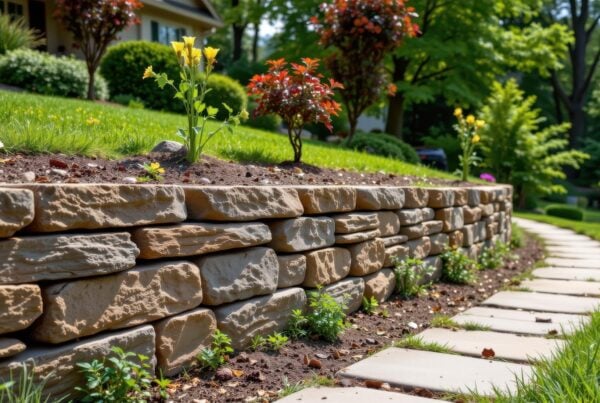
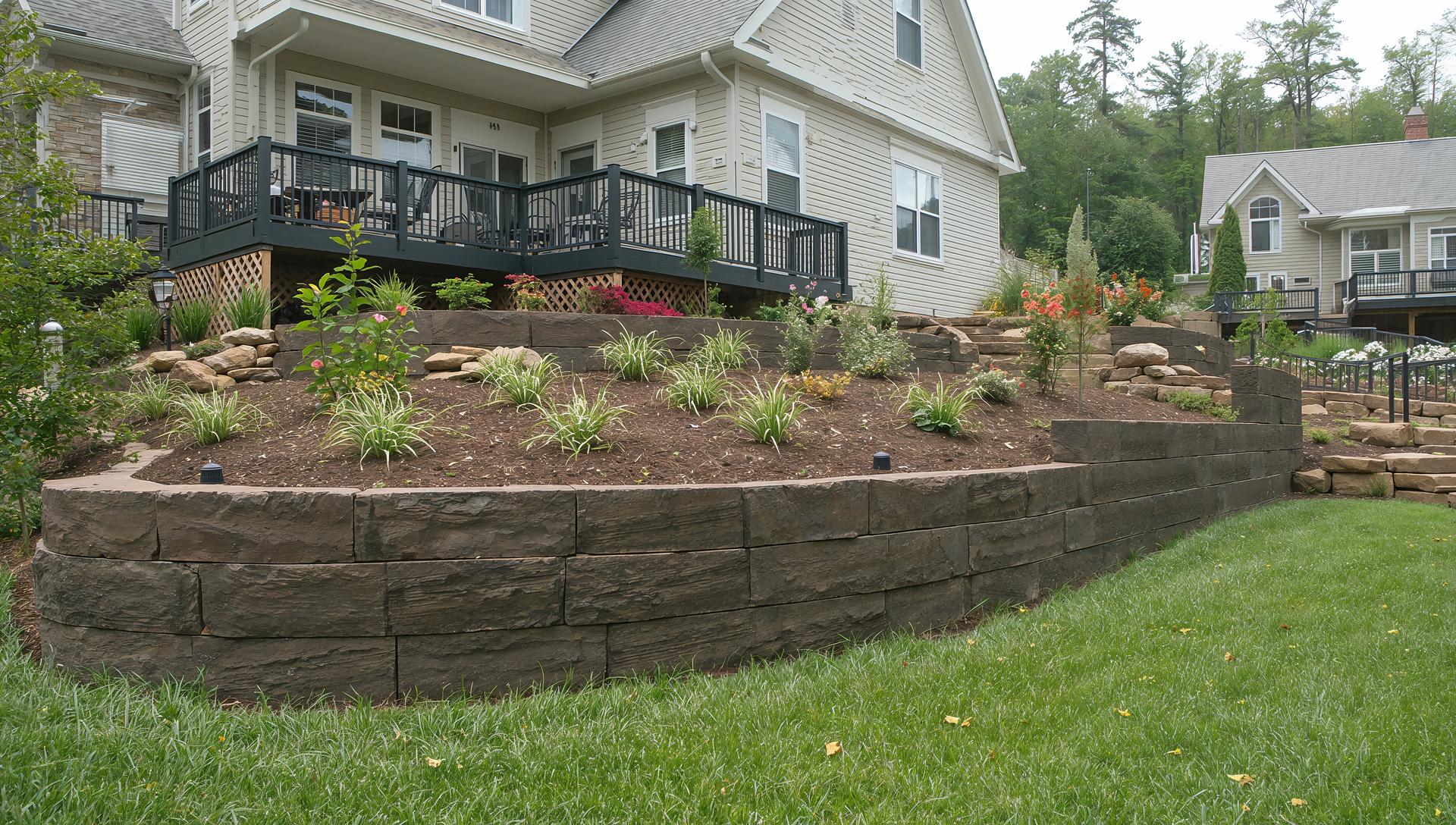
Terracing, retaining walls, geogrid reinforcement, and deep-rooted plantings keep the hillside from moving. If the slope is failing, structure comes first.
A quick local permitting reality check (retaining walls)
In Douglas County, a building permit and engineered design are required for retaining walls over 4 feet (measured from the top of wall to the bottom of the footing) or for walls of any height that support a surcharge (like a driveway, patio, structure footing, or sloping soil near the wall). Terraced/tiered walls can also trigger permitting depending on height and spacing.
Step-by-step: How to choose the right erosion control plan for your slope
Step 1: Identify the water source (roof, irrigation, or surface runoff)
If erosion starts directly below a downspout, the fix is rarely “more rock.” It’s usually a better route, a protected outlet, or a buried drain to a safe discharge location.
Step 2: Decide if the slope needs structure or just surface protection
If the hillside is slumping, cracking, or bulging, you’re in “stabilization first” territory. If it’s mostly sheet erosion (thin soil loss), you may be able to solve it with drainage + blankets + planting.
Step 3: Break the slope into smaller “energy zones”
Long uninterrupted slopes accelerate runoff. Terracing, small retaining segments, or planted berms slow water down and create places for roots to hold soil.
Step 4: Install “temporary-to-permanent” erosion control
A proven approach is to use temporary controls (blankets, wattles, mulch) to protect soil while permanent vegetation establishes. NRCS describes practices like Critical Area Planting for high-erosion sites where establishing lasting vegetation is the goal.
Step 5: Make irrigation part of the solution (not the cause)
Overwatering on slopes can trigger runoff, especially with compacted soils. Smart zoning, matched precipitation rates, and drip for beds can keep water where plants use it. If you already have washouts, irrigation adjustments are often a fast win.
When a “drainage structure” may be part of the plan
In certain properties, controlling concentrated flow requires a designed outlet or stabilization at a steep drop. NRCS includes practices such as Grade Stabilization Structures to manage erosive flows and protect channels/outlets.
Local angle: Castle Rock slopes, permits, and why “do it right once” matters
Castle Rock neighborhoods often have elevation changes that push drainage toward side yards and back fences. Add spring moisture and snowmelt, and runoff can concentrate quickly. If your solution involves a retaining wall, it’s important to plan around permitting and engineering thresholds early—so you don’t redesign mid-project.
Douglas County specifically notes permit/engineering triggers for retaining walls over 4 feet (measured top-to-bottom of footing) and for walls supporting a surcharge; tiered walls have spacing rules that can cause multiple smaller walls to be treated as one taller wall.
CTA: Get a slope stabilization plan you can trust
If your Castle Rock yard is showing erosion, the best time to fix it is before the next heavy moisture cycle. Rocky Mountain Precision Services can evaluate runoff paths, recommend the right retaining wall or terracing approach, and install erosion control that looks clean and holds up.
Schedule a Slope & Erosion Evaluation
FAQ: Sloped Yard Erosion Control in Castle Rock
Do I need a retaining wall to stop erosion?
Not always. Many slopes stabilize with corrected drainage, surface protection (blankets/mulch), and the right plants. A retaining wall is most helpful when there’s a grade change you need to “hold,” or the slope is structurally failing.
How do I know if my retaining wall needs a permit in Douglas County?
Douglas County states a permit and engineered design are required when a wall is over 4 feet in height measured from top of wall to bottom of footing, or when a wall supports a surcharge (like a driveway, patio, structure, or sloping soil near the wall). Tiered walls can also qualify based on height and spacing.
What’s the fastest short-term erosion fix before spring storms?
If soil is already moving, prioritize: (1) redirect concentrated water (especially downspouts), (2) stabilize bare soil with mulch/blankets, and (3) add temporary check features like wattles where water is channeling—then follow with permanent planting.
Can planting alone hold a slope?
Planting is powerful when paired with the right establishment strategy. NRCS describes Critical Area Planting as establishing permanent vegetation on high-erosion sites—often used with complementary practices (like mulching) to improve success.
Why do some erosion fixes “fail” after one season?
The most common reason is water concentration: runoff still funnels to one spot and overwhelms mulch/rock. Another is missing drainage behind a wall/terrace. Erosion control needs both flow control and slope protection working together.