


An expert guide to choosing the perfect outdoor fire feature for your Douglas County lifestyle.
As the crisp Colorado air settles in, you might find yourself dreaming of next year’s outdoor gatherings, picturing warm evenings spent under the stars. A fire pit is often the glowing centerpiece of these visions, but the classic debate quickly follows: the rustic crackle of a wood fire or the clean convenience of gas? For homeowners in Castle Rock and across Douglas County, making the right choice involves more than just preference—it’s about understanding our unique climate, lifestyle, and local regulations. This guide will help you navigate the benefits of each to ensure your landscape renovation is both beautiful and functional.
The Great Debate: Ambiance, Convenience, and Cost
Choosing between a gas and a wood-burning fire pit is the first major decision in creating your ideal outdoor living space. Each option offers a distinct experience and comes with its own set of practical considerations. Let’s break down the key differences to help you decide which fuel source best suits your vision for your Castle Rock backyard.
The Case for Gas Fire Pits
Ultimate Convenience: The primary allure of a gas fire pit is its ease of use. A fire is available at the flip of a switch or the turn of a knob—no chopping wood, battling with kindling, or waiting for embers to die down. This convenience means you’re more likely to use it for spontaneous moments of relaxation.
Clean and Controlled: Gas fire pits burn cleanly without smoke, ash, or embers. This is a significant advantage if you or your guests have sensitivities to smoke, or if you’re concerned about the smell lingering on clothing and furniture. The flame is also adjustable, giving you complete control over the heat output and ambiance.
Safety and Regulations: With no sparks, gas fire pits are generally considered a safer option, especially for families with children and pets. This is particularly important in Colorado, where fire restrictions can be a major concern. During many local fire bans, gas appliances are still permitted for use.
The Charm of Wood-Burning Fire Pits
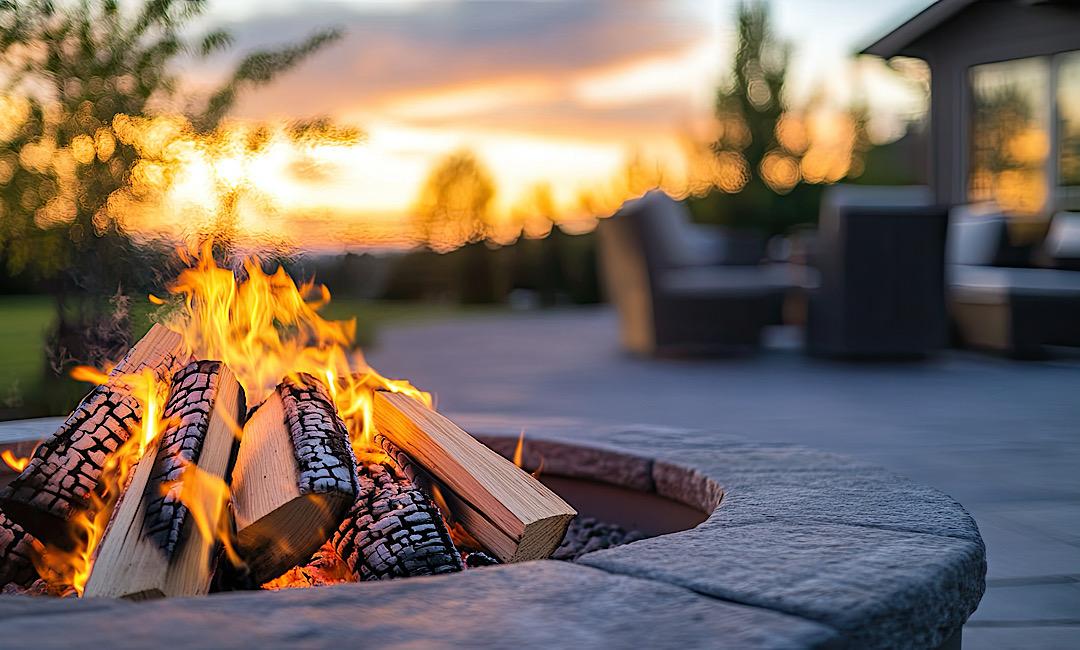
Unmatched Ambiance: For many, nothing can replace the authentic campfire experience. The sights, sounds, and smells of a real wood fire—the crackling logs and rustic aroma—create a nostalgic and engaging atmosphere that a gas flame cannot fully replicate.
Greater Heat Output: A well-stoked wood fire typically produces more radiant heat than its gas counterpart, making it a cozier option for those truly chilly Castle Rock evenings.
Lower Initial Cost & Cooking: Generally, a basic wood-burning fire pit has a lower upfront installation cost than a gas unit, which requires running a dedicated fuel line. Plus, they are perfect for cooking, from roasting marshmallows to grilling over the open flame.
Side-by-Side Comparison
| Feature | Gas Fire Pit | Wood-Burning Fire Pit |
|---|---|---|
| Ambiance | Consistent flame, clean look | Crackling logs, rustic smell, natural feel |
| Convenience | Instant on/off, easy control | Requires time to start and extinguish; manual effort |
| Maintenance | Minimal; occasional check of components | Requires regular ash cleanup and wood storage |
| Installation Cost | Higher; requires professional gas line installation | Lower; simpler construction |
| Ongoing Cost | Natural gas or propane refills | Cost of firewood (can be cheap or free) |
| Safety | No sparks or embers; controlled flame | Produces sparks and embers; requires constant supervision |
| Environmental Impact | Burns cleaner with fewer emissions | Creates smoke and particulate matter |
Local Considerations for Castle Rock & Douglas County
Living in the Front Range means we must be especially mindful of fire safety fire safety and HOA landscaping guidelines. Douglas County and the Town of Castle Rock periodically issue fire restrictions based on weather conditions.
- Fire Restrictions: During Stage 1 or Stage 2 fire restrictions, wood-burning fire pits are often prohibited. However, fires within liquid-fueled or gas-fueled stoves and professionally installed fire pits are typically still allowed. This makes a gas fire pit a more reliable year-round option for outdoor enjoyment. Always check the current status on the Douglas County Sheriff’s Office website.
- Permitting: According to the Town of Castle Rock, a permit is not required for a portable wood-burning fire pit or one fueled by a propane tank. However, if you plan a custom-installed natural gas fire pit, a permit is necessary due to the installation of the gas line.
- Property Value: A permanent fire pit can significantly boost your landscaping ROI by creating an inviting outdoor living space.
Did You Know?
Natural gas fire pits emit 99% fewer emissions than a wood-burning fire pit, making them a significantly more eco-friendly choice for air quality in our beautiful Colorado environment.
Expert Design and Installation is Key
Regardless of your choice, professional installation is crucial for safety, compliance, and longevity. An expert ensures your fire pit is constructed to the highest safety standards, meets all local codes, and is built with durable materials that can withstand Colorado’s weather cycles. At Rocky Mountain Precision Services, we specialize in designing and installing stunning hardscapes, including custom fire pits that become the heart of your outdoor space.
Frequently Asked Questions
Do gas fire pits give off enough heat?
Yes, modern gas fire pits produce a significant amount of heat, measured in BTUs (British Thermal Units). While a large wood fire can feel hotter, a high-BTU gas fire pit provides ample warmth for a comfortable gathering space. The heat is also more consistent and easily controlled.
Can I still cook over a gas fire pit?
While you can roast marshmallows over most gas fire pits, they are not generally designed for grilling or cooking food that might drip grease or debris onto the burner components. Wood-burning pits are the better choice for an authentic outdoor cooking experience.
Which option is safer for my Castle Rock home?
Gas fire pits are generally considered safer because they don’t produce sparks or embers that could ignite nearby combustibles. The controlled flame and instant-off capability provide greater peace of mind. However, a properly built and maintained wood fire pit, used with care and attention, is also safe.
What if Douglas County issues a fire ban?
This is a key consideration in our area. During most fire bans (Stage 1 and 2), wood and charcoal fires are typically prohibited. Gas-fueled appliances, however, are often exempt and can still be used. This makes gas fire pits a more reliable option for entertainment throughout the fire season.