


A Homeowner’s Guide to Castle Rock & Douglas County Regulations
Planning a landscape project in Castle Rock often involves managing our unique Colorado terrain. Hills and slopes can be both a beautiful asset and a challenge, especially when it comes to drainage and usable space. A professionally built retaining wall is often the perfect solution, but it’s a project that requires careful planning—not just in design, but also in navigating local regulations. If you’re considering a landscape renovation, one of your first questions is likely: “Do I need a permit?” This guide will walk you through the specifics for Douglas County and Castle Rock to ensure your project starts on the right foot.
Understanding the 4-Foot Rule in Douglas County
For homeowners in Castle Rock and throughout unincorporated Douglas County, the primary rule of thumb for retaining wall permits is based on height. A building permit is required for any retaining wall that is over 4 feet tall. This height isn’t measured from the ground level to the top of the wall, but more specifically, from the bottom of the footing (the foundation) to the top of the wall. This is a critical distinction, as a wall that appears to be less than four feet tall from the finished grade might still require a permit once its foundation is factored in.
Going beyond this height threshold means the project is considered significant enough to require oversight for safety and structural integrity. The county’s goal is to ensure that any substantial structure is built to last and won’t pose a risk to your property or neighboring ones.
What is a Surcharge? It’s More Than Just Height
Height isn’t the only factor. A permit and an engineered design are also required for a retaining wall of *any height* if it is supporting a “surcharge.” A surcharge is any additional weight or pressure exerted on the soil behind the wall. Common examples of surcharges include:
- A sloped hill rising above the wall
- A driveway or patio located close to the top of the wall
- The foundation of a nearby structure
- Heavy materials stored near the wall
This is where things can get technical. Even a two-foot-tall wall holding back the slope for a driveway needs professional engineering and a permit because of the extra load. An expert hardscaping & stone work contractor can help you identify if your project involves a surcharge.
Tiered Walls: An Important Consideration
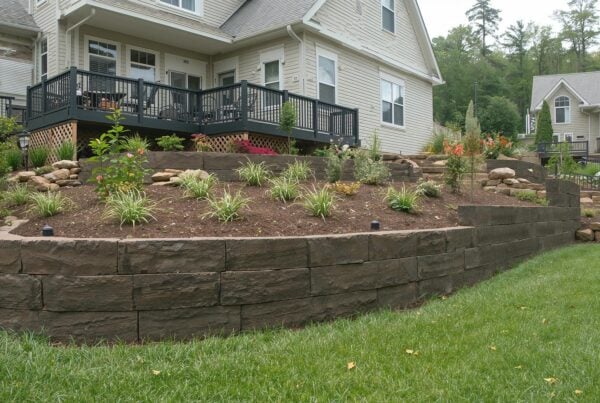
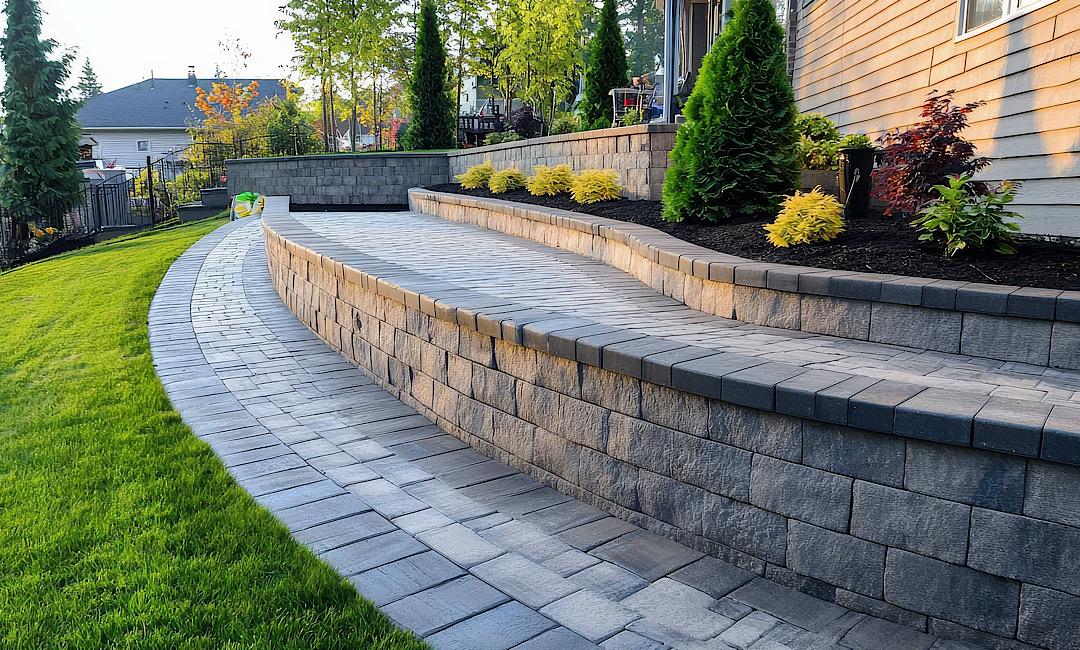
A popular design choice for managing steeper slopes is to build a series of shorter, tiered retaining walls instead of one tall one. While this can be aesthetically pleasing, it comes with its own set of rules. Douglas County may consider a series of tiered walls as a single structure depending on their proximity.
The rule is that if the distance between the walls is less than two times the height of the lower wall, they are treated as one combined wall system and will require a permit and an engineered design if their total height exceeds four feet. This is a common hurdle when landscaping a hill. For example, two 3-foot-tall walls spaced 5 feet apart would be considered a single 6-foot wall system, thus requiring a permit. However, if those same walls were 6 feet apart or more, they could be treated as separate structures.
The Permit Application Process: What to Expect
If your project requires a permit, you’ll need to submit a formal application to the Douglas County Building Division. The requirements are thorough to ensure the final structure is safe and compliant. Here’s a general overview of what you will need:
- 1.
Building Permit Application: This includes listing your licensed contractor.
- 2.
Engineered Construction Plans: For any wall requiring a permit, the plans must be stamped and signed by a Colorado-registered professional engineer. These plans detail the wall’s construction, materials, footing design, and drainage system.
- 3.
Site Plan: A drawing that shows the location of the proposed wall on your property, including distances to property lines and any existing structures or easements.
- 4.
HOA Approval: If applicable, a letter from your Architectural Control Committee (ACC) may be required.
Once the permit is issued, inspections will be required during construction. The designing engineer must perform inspections to verify that the wall is being built according to the approved plans. A final letter from the engineer is submitted to the county to close out the permit.
Did You Know?
Retaining wall permit fees in Douglas County are not a flat rate. They are calculated based on the total project valuation, which includes both materials and labor costs. Working with an experienced local company like Rocky Mountain Precision Services can help you develop an accurate budget that accounts for these “soft costs.”
The Castle Rock Local Angle
While building permits are issued through Douglas County, homeowners in the Town of Castle Rock should also be aware of local zoning and development standards. The town is focused on maintaining its natural beauty, which includes regulations on hillside protection and grading. When you work with a local hardscaping expert, they will be familiar with both county-level building codes and municipal-level zoning requirements in Castle Rock. This includes ensuring your project respects property line setbacks and doesn’t interfere with drainage easements, which is a crucial aspect of proper landscape design.
A well-designed retaining wall does more than just hold back soil; it can improve your property’s drainage, create more usable flat areas for patios or gardens, and enhance curb appeal. By understanding the permit requirements upfront, you can plan your 2025 landscape projects without unexpected delays or expenses.
Plan Your Project with Confidence
Navigating permits and engineering can feel overwhelming. Let the experts at Rocky Mountain Precision Services handle the details. We specialize in designing and installing beautiful, durable hardscapes, including engineered retaining walls that meet all Castle Rock and Douglas County codes.
Frequently Asked Questions
How long does it take to get a retaining wall permit in Douglas County?
Timelines can vary depending on the complexity of the project and the county’s workload. Generally, simple projects may be reviewed more quickly, while complex engineered plans could take several weeks. It’s best to factor this into your project timeline well in advance.
Can I build a retaining wall myself and get a permit?
While homeowners can sometimes act as their own contractor for certain projects, any retaining wall requiring a permit also requires plans from a licensed Colorado engineer. For those new to major projects, reviewing a beginner’s guide for Castle Rock homeowners can provide helpful context on professional requirements.
What happens if I build a retaining wall without a required permit?
Building without a permit can lead to stop-work orders, fines, and potentially being required to tear down the structure. It can also create significant problems when you decide to sell your home. It’s always more cost-effective and safer to follow the correct process from the start.
Does my contractor handle the permit process?
A reputable and experienced contractor like Rocky Mountain Precision Services will typically manage the entire permit submission process on your behalf. They will work with the engineer to get the necessary plans and ensure all paperwork is submitted correctly to the Douglas County Building Division.