


If your patio cracked, shifted, or started pooling water after winter, it’s usually not “bad luck.”
In Castle Rock, Colorado, patio failures commonly trace back to a predictable chain reaction: water gets where it shouldn’t, temperatures swing above and below freezing, and the ground (or the patio base) moves. February is the perfect time to diagnose the “why” before spring rebuilds begin—because the best-looking surface won’t last if the base, drainage plan, and material choices don’t match our freeze–thaw reality.
The Colorado “Patio Failure Triangle”: Water + Freeze–Thaw + Weak Base
Most patios don’t fail because the surface material is “bad.” They fail because the system beneath the surface wasn’t built to manage moisture and movement. Here’s the core mechanism:
1) Water infiltrates (from snowmelt, irrigation, downspouts, or poor grading).
2) Temperatures swing and water freezes, expanding and creating pressure in soil and joints.
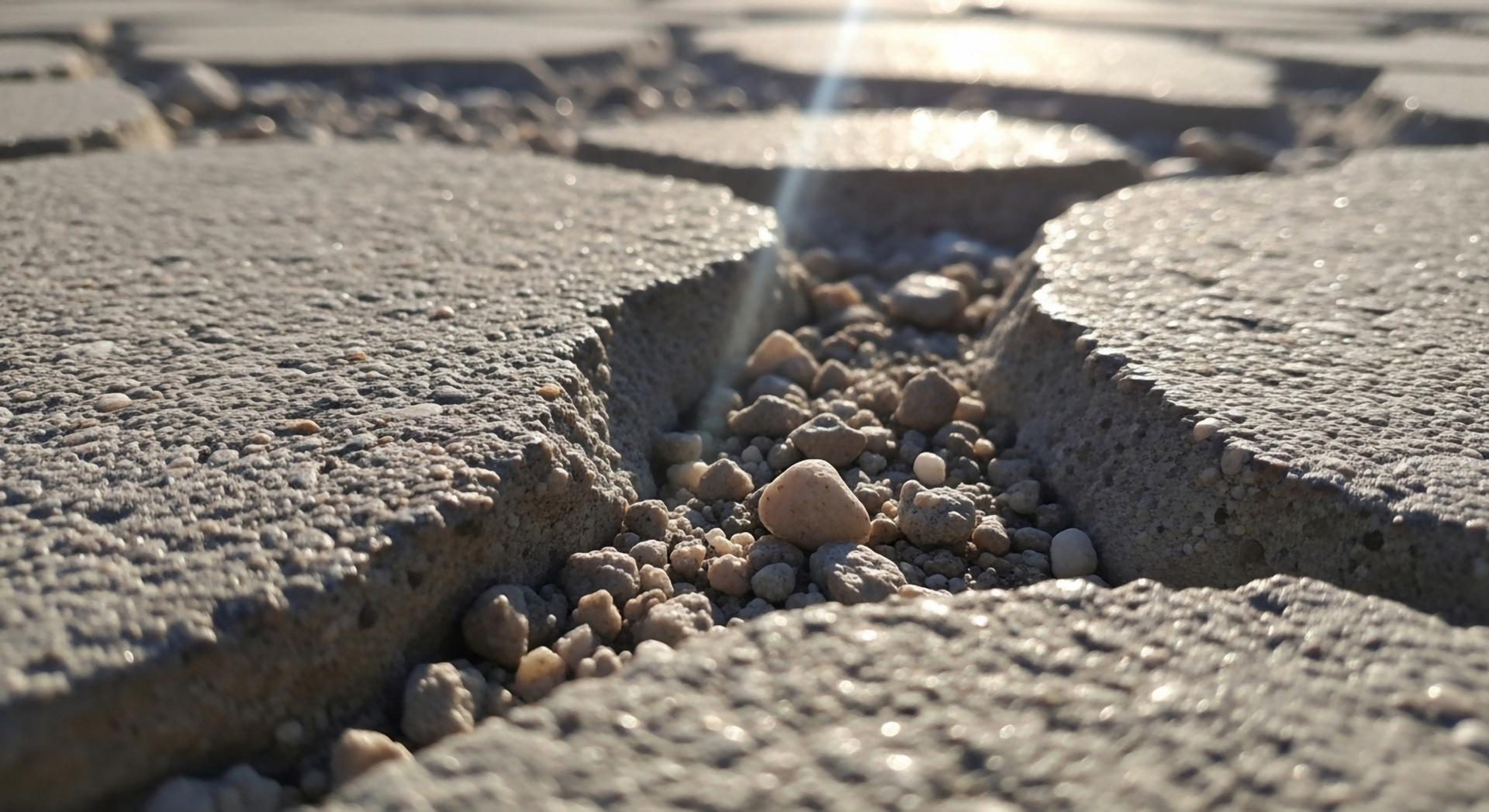
3) The base/soil shifts because it’s saturated, not properly compacted, not thick enough, or not draining—preventable issues that become visible as settlement, heaving, and cracking.
2) Temperatures swing and water freezes, expanding and creating pressure in soil and joints.
3) The base/soil shifts because it’s saturated, not properly compacted, not thick enough, or not draining—preventable issues that become visible as settlement, heaving, and cracking.
Concrete vs. Pavers vs. Stone: How Failure Shows Up (and what usually caused it)
| Surface | Common symptom in Castle Rock | Most common root cause | What “good” construction focuses on |
|---|---|---|---|
| Concrete patio | Cracks, surface flaking (scaling), spalling, low spots that hold ice | Water + freeze–thaw; deicer exposure; poor finishing/curing; slab drainage issues | Proper slope, control joints, air-entrained mix for severe exposure, curing, and drainage away from slab edges |
| Paver patio | Uneven pavers, trip edges, spreading joints, sunken corners | Base too thin, not compacted in lifts, poor edge restraint, water trapped in base | Engineered base thickness suited to freeze–thaw, tight compaction, edge restraint, and predictable water exit routes |
| Flagstone / natural stone | Rocking stones, cracked corners, failing joints/mortar, uneven settling | Water underneath + movement; rigid mortar in a moving environment; poor drainage plane | Drainage-first base design, appropriate setting bed, and jointing strategy that fits expected movement |
Note: Deicer-related scaling risk and freeze–thaw durability are strongly influenced by air entrainment, water–cement ratio, curing, and finishing practices for concrete.
The real culprit is usually below the surface: base prep and moisture management
In a freeze–thaw climate, the base isn’t just “something to set the patio on.” It’s the engineered layer that keeps water moving, distributes loads, and reduces the chance that native soils (including clay-heavy areas common along the Front Range) will telegraph movement into your finished surface.
Compaction (done correctly)
A base can be the “right” material but still fail if it wasn’t compacted in lifts. Loose pockets trap water, settle later, and create the classic “one corner sank” look.
Separation from native soils
In many builds, base stone slowly migrates into native soil over time, thinning the working base layer. A geotextile separator can help keep the base doing its job.
Drainage “exit strategy”
If water gets into the system, it must have a predictable way out. Without slope, drain paths, or correct grading, winter turns trapped moisture into repeated expansion cycles.
For interlocking concrete pavers, industry guidance recognizes that base thickness often increases where freeze–thaw cycles, expansive soils, or harsh climates are present—and that local conditions should drive the design.
Quick “Did you know?” facts (that explain a lot of winter patio damage)
Freeze–thaw isn’t once per season. Along the Front Range, temperature swings can cross freezing repeatedly, which compounds movement when water is present.
Poor drainage is often the “first domino.” When water consistently sits near or under hardscapes, it dramatically increases freeze–thaw risk.
Concrete can be freeze–thaw resistant and still scale under deicers if mix, curing, finishing, and exposure conditions aren’t right.
A technical breakdown: the most common patio failure causes in Colorado (and how to prevent each one)
1) Water directed toward the patio (grading and downspouts)
If runoff from roofs, downspouts, or yard grading sends meltwater onto the patio edge, the base stays wetter longer—exactly what freeze–thaw needs to create movement. Prevention usually starts with a site walk during snowmelt or rain: identify where water concentrates, then plan slopes and discharge points so water moves away instead of under.
2) Base thickness and compaction that don’t match local conditions
“It looked fine at install” is common—because base problems often show up after the first few wet/frozen seasons. In freeze–thaw regions and in soils that move with moisture, you typically need a more robust base than a mild-climate template. Industry resources note thicker bases are often used in regions with numerous freeze–thaw cycles or expansive soils, and local standards/engineering judgment matter.
3) Trapped moisture inside the system (no drainage layer, no separation, no “escape route”)
Many failures aren’t “too much water,” but rather “water that can’t leave.” A properly designed base is an engineered drainage layer as much as it is a structural layer. Using a separator fabric between native soil and the base is one method often used to help preserve base integrity over time.
4) Concrete scaling from freeze–thaw + deicers (material + finishing + curing)
If your concrete looks like the surface is flaking or “peeling,” that’s often scaling. Research and industry guidance discuss how deicer scaling can be influenced by air entrainment (especially for severe exposure), water–cement ratio limits, curing, and finishing practices that avoid creating a weak surface layer.
Practical takeaway: If you’re replacing a concrete patio, ask your installer about freeze–thaw exposure assumptions, air entrainment, curing plan, and how long to wait before using deicers. These details often matter as much as thickness.
5) Edge restraint and joint strategy (pavers and stone)
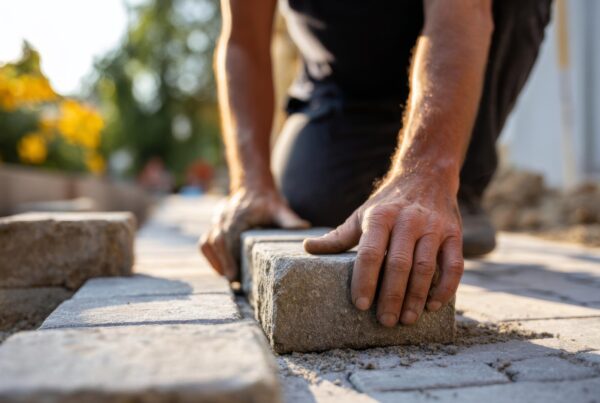
If pavers “walk” outward or joints widen, it’s often because the perimeter wasn’t restrained well enough or because repeated movement is pumping bedding sand out. Your surface can only stay flat if it’s laterally contained and the joints are built to handle seasonal movement.
Castle Rock angle: what to check in February before you rebuild in spring
If you’re planning a patio rebuild in Castle Rock, February is a smart month to gather information—because you can still see how snowmelt behaves, where ice lingers, and which parts of the yard stay saturated.
A homeowner checklist (fast, actionable)
• Walk the site during melt: Where does water flow and where does it pool?
• Check downspouts: Are they dumping near the patio edge or into a spot that backflows?
• Look for repeating patterns: Ice that reforms in the same place often indicates poor slope or drainage.
• Note heaving/settlement zones: Corners and edges are common failure points because water and frost access is easier there.
• Plan your “water exit route” first: Then decide surface material (concrete vs pavers vs stone).
CTA: Get a patio rebuild plan that matches Castle Rock’s freeze–thaw reality
Rocky Mountain Precision Services helps homeowners in Castle Rock diagnose patio failures and rebuild with the right base prep, grading, and drainage strategy—so the next winter doesn’t undo the investment.
Best fit for you if: your patio has shifting stone/pavers, cracked concrete, persistent puddling, or you want a technically sound plan before spring construction.
Prefer a specific scope? Ask about hardscaping & stone work, concrete installations, and drainage planning during your consult.
FAQ: Patio failure causes in Colorado
Why did my patio look fine for a year or two and then suddenly shift?
Base and drainage issues often don’t show immediately. After repeated wetting, freezing, thawing, and minor settlement, small voids turn into measurable movement—especially at edges and corners where moisture is easiest to access.
Is concrete or pavers better for Castle Rock’s freeze–thaw cycles?
Either can perform very well when designed correctly. Concrete needs the right mix design for freeze–thaw exposure, proper finishing, and proper curing to reduce scaling risk—especially where deicers are used.
What’s the biggest preventable cause of patio failure?
Water management: slope, downspout discharge, and a base system that drains instead of trapping moisture. Poor drainage is repeatedly cited as a key driver of freeze–thaw damage.
Why is my concrete surface flaking, not just cracking?
Flaking or peeling is often “scaling,” commonly associated with freeze–thaw exposure and deicer use, especially if the surface layer is weak from finishing practices or if curing/exposure timing wasn’t ideal.
How do I know if my patio needs a full rebuild versus a repair?
If the underlying base is failing (widespread settlement, recurring heaving, chronic pooling), surface-level fixes often don’t last. If the issue is isolated (a small section of pavers, a single crack with stable elevation), targeted repair may be reasonable—after confirming drainage isn’t feeding the problem.
Glossary (quick definitions)
Freeze–thaw cycle
Repeated freezing and thawing of water in soil, joints, or pores. When water freezes it expands, which can create pressure and movement in hardscape systems.
Base (engineered base)
Compacted aggregate layers beneath a patio designed to support loads and promote drainage. In freeze–thaw climates, base design is a primary durability factor.
Scaling (concrete)
Surface flaking or peeling of concrete. Often associated with freeze–thaw exposure and deicer use, and influenced by air entrainment, curing, and finishing practices.
Air-entrained concrete
Concrete is intentionally mixed with tiny air bubbles to improve freeze–thaw durability by providing “relief space” for expanding water during freezing.
Edge restraint (pavers)
A rigid perimeter system that prevents pavers from spreading outward over time, helping the surface stay tight and level.